

Table of Contents
- Does 925 Silver Turn Skin Green? The Short Answer
- Why 925 Sterling Silver Can Leave a Green Stain
- Is a Green Mark a Sign of Fake Silver or an Allergy?
- How to Stop Sterling Silver from Turning Skin Green
- How to Clean 925 Sterling Silver the Right Way
- Does Moissanite Jewelry Turn Skin Green?
- Final Verdict: Wear Your 925 Silver with Confidence
- Frequently Asked Questions
Last Updated: September 9, 2026
Does 925 Silver Turn Skin Green? The Short Answer
Yes, 925 silver can turn skin green, but the mark is not a sign of poor quality or a fake metal. The discoloration comes from a chemical reaction between the copper in the alloy and compounds on your skin. We want you to understand exactly why this happens and how to prevent it before you ever see a stain.
The reaction is harmless, temporary, and washes off easily. That green tint is copper oxidizing as it interacts with your sweat and skin oils. Below, we'll show you exactly how to stop sterling silver from turning skin green, what the stain actually means for your jewelry's authenticity, and the simple habits that keep your pieces looking flawless for years.

Why 925 Sterling Silver Can Leave a Green Stain
The green mark on your finger or neck is the result of a specific chemical reaction called oxidation, not a defect in your jewelry. Pure silver (fine silver) is too soft for everyday wear, so jewelers mix it with other metals to create an alloy that holds its shape. The most common blend, 925 sterling silver, contains 92.5% pure silver and 7.5% other metals, usually copper, which adds strength and durability (britannica.com).

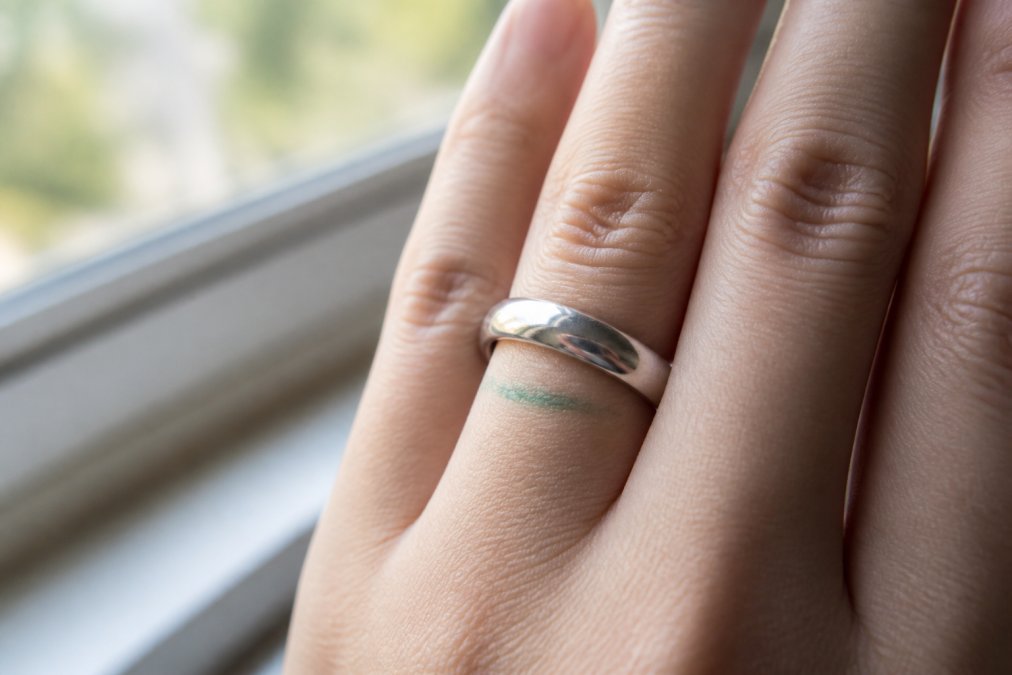
The Chemistry Behind the Green Stain
The reaction is a form of corrosion. When the copper in the alloy comes into contact with perspiration, the salt and acids in sweat break down the copper atoms. These copper ions then react with chloride ions in your sweat to form copper chloride, which has a greenish tint. Additionally, sulfur compounds in the air can react with the copper to form copper sulfate, another green compound. This process is accelerated by heat and moisture, which is why you are more likely to see a stain after a workout or on a humid day.
This is fundamentally different from what happens with fake jewelry. A piece made of base metals like brass (a copper-zinc alloy) will often leave a darker, more pronounced green or black mark because it contains a much higher percentage of copper. In contrast, 925 sterling silver's copper content is limited to 7.5%, so the reaction is typically lighter and more gradual.
The Role of Copper in the Alloy
Copper is the workhorse of sterling silver. Without it, your ring would bend out of shape within weeks. The trade-off is that copper is reactive. When exposed to sulfur compounds in the air or acidic sweat on your skin, it corrodes and leaves that telltale green residue. The reaction is a surface-level phenomenon; it does not compromise the structural integrity of the metal.
This is why some people see stains and others never do. The difference comes down to your body chemistry, not the quality of the metal. A piece of 925 silver that stains one person's skin may leave another person completely mark-free.
Sweat, Moisture, and Skin Acidity
Your skin's pH balance plays a major role in how your jewelry behaves. The average skin pH is slightly acidic, around 4.5 to 5.5 (peer-reviewed research). People with more acidic sweat, often influenced by diet, stress, or hormonal changes, tend to experience faster oxidation and more visible discoloration. Environmental factors amplify the reaction: humidity, heat, and physical activity all increase perspiration, which accelerates the chemical reaction between copper and your skin.
The good news is that this reaction is surface-level. The stain is not permanent, and it does not damage the jewelry itself. Washing your skin with soap and water removes the mark completely, usually within minutes. The jewelry can be cleaned with a standard silver polishing cloth to remove any tarnish that has formed on the metal itself.
Is a Green Mark a Sign of Fake Silver or an Allergy?
A green mark is not a sign of fake silver, and it is not an allergic reaction. Many people mistake the stain for a metal sensitivity, but the two are entirely different. A true metal allergy typically causes redness, itching, swelling, or a rash. The green stain causes none of these symptoms.
What the green mark actually indicates is that your jewelry contains copper, which is exactly what you want in a durable piece of 925 sterling silver. Fake silver pieces often use base metals like nickel or brass, which can trigger real allergic reactions in sensitive individuals. If you experience itching or a rash rather than a simple stain, that is a different issue entirely.
For those with genuine metal sensitivity, nickel-free options are the solution. Many high-quality pieces, including rhodium-plated jewelry, create a protective barrier between the metal and your skin, which we will cover in the next section.
How to Stop Sterling Silver from Turning Skin Green
Preventing the green stain comes down to managing the contact between the copper alloy and your skin. A few simple habits can eliminate the problem almost entirely, regardless of your body chemistry. Beyond the basics, the most overlooked factor is the interaction between your jewelry and the personal care products you use daily.
The most effective strategies are:
- Remove jewelry before swimming, showering, or heavy exercise
- Apply lotions, perfumes, and sunscreen before putting on your jewelry
- Store pieces in a dry, airtight container when not in use
- Choose rhodium-plated pieces that create a barrier against moisture
- Clean your jewelry regularly to remove buildup that accelerates oxidation
The Hidden Culprits: Personal Care Products
Most advice stops at "apply products before jewelry," but the specific ingredients matter more than the timing. Many lotions, sunscreens, and perfumes contain chemical compounds that actively accelerate the oxidation of copper. For example:

- Sunscreens often contain avobenzone and oxybenzone, which can react with metal ions and speed up corrosion.
- Perfumes and body sprays are high in alcohol and essential oils that can break down the metal's surface over time.
- Chlorine-based products (found in some cleansers and pool water) are particularly aggressive and can cause immediate discoloration.
A practical approach is to create a "jewelry routine." Apply your skincare and fragrance in the morning, wait for them to fully absorb (at least 5-10 minutes), and only then put on your jewelry. At night, remove your pieces before washing your face or applying night creams. This simple sequencing can reduce staining by a significant margin for most people.
Protective Coatings and Rhodium Plating
Rhodium plating is the single most effective way to prevent green skin discoloration. Rhodium is a precious metal in the platinum family that is highly resistant to corrosion. When applied as a thin surface treatment over 925 sterling silver, it acts as a protective barrier that keeps your skin from contacting the copper alloy underneath.
Rhodium plating also gives the jewelry a brighter, whiter appearance that closely mimics the look of white gold or platinum. The plating does wear down over time with daily use, typically lasting 6 to 12 months with regular wear, but routine re-plating restores both the shine and the protection.
A Temporary At-Home Barrier
If you do not have rhodium-plated pieces and want a quick, temporary solution, clear nail polish can act as a barrier. Apply a thin coat to the inside of rings or the back of pendants where they contact your skin. This creates a physical separation between the metal and your skin. The polish will wear off over time and needs reapplication every few weeks, but it is an effective stopgap for occasional wear.
Lifestyle Factors: Diet and Environment
Your daily habits influence how quickly your jewelry tarnishes more than almost anything else. Dietary factors can play a role. Certain foods, particularly those high in sulfur like garlic, onions, and eggs, can alter the composition of your sweat. Medications, including certain antibiotics and supplements, can also change skin pH and make you more prone to staining during certain periods.
Environmental factors like humidity, air pollution, and even chlorinated water accelerate metal oxidation. If you live in a humid climate or spend time in pools and gyms, you will likely notice faster tarnishing than someone in a dry, cool environment. In these cases, storing your jewelry in an airtight bag with a small silica gel packet can help absorb excess moisture and slow the reaction.
How to Clean 925 Sterling Silver the Right Way
Regular cleaning removes the tarnish buildup before it has a chance to transfer onto your skin. The right method preserves both the metal and any protective coating.
Use a gentle approach with items you likely already have at home:
- Mix a few drops of mild dish soap into a bowl of warm water
- Soak your jewelry for 2 to 3 minutes
- Scrub gently with a soft-bristled toothbrush, focusing on crevices
- Rinse under warm running water
- Pat dry with a soft, lint-free cloth
Avoid harsh chemical cleaners, abrasive polishes, and ultrasonic machines if your piece has rhodium plating. These can strip the protective coating and accelerate future tarnishing. A polishing cloth designed specifically for silver is the safest maintenance tool between deeper cleanings.
Does Moissanite Jewelry Turn Skin Green?
Moissanite itself does not turn skin green. The stones are composed of silicon carbide, which is chemically stable and non-reactive. If you see a green stain while wearing moissanite jewelry, the source is the metal setting, not the gemstone.
The question comes down to the quality of the mounting. Lower-quality moissanite pieces may use base metals or thin gold plating over copper, which wears away quickly and causes staining. High-quality moissanite, like the VVS1 stones we use at 834jewelry, is set in genuine 925 sterling silver with rhodium plating. This combination ensures the jewelry maintains its brilliance without the discoloration issues associated with cheaper alternatives.
GIA's guide to moissanite and gemstone properties confirms that moissanite is a distinct gemstone with optical properties that differ from diamonds, and its chemical stability means the stone itself will not react with your skin.
Final Verdict: Wear Your 925 Silver with Confidence
The green stain that sometimes appears with 925 silver is a minor, harmless reaction between copper and your skin chemistry. It does not mean your jewelry is fake, cheap, or poorly made. In fact, it confirms that your piece contains the copper alloy that gives sterling silver its durability.
Understanding why the reaction happens gives you the tools to prevent it. Choose rhodium-plated pieces, practice good jewelry maintenance, and remove your pieces before activities that cause heavy sweating. These habits will keep your skin stain-free and your jewelry looking brilliant for years.
For pieces that combine the durability of 925 sterling silver with the protection of rhodium plating, explore our collection at 834jewelry. Every piece is crafted in genuine 925 sterling silver, GRA certified, and designed to pass diamond testers, so you get the high-end aesthetic without the worry. Get started with 834jewelry and wear your 925 silver with total confidence.
Frequently Asked Questions
Can fake silver turn skin green?
Yes, but for a different reason. Fake silver often uses a base metal like copper or nickel with a thin silver plating. When that plating wears off, the base metal reacts with sweat and skin acidity, causing a green stain or a skin reaction. Genuine 925 sterling silver is 92.5% pure silver, with the remaining 7.5% typically copper. The green mark from real 925 silver comes from copper oxidation, not from a lack of silver content.
Why does my 925 sterling silver turn green?
Your 925 sterling silver turns green because of a chemical reaction between the copper in the alloy and your skin. Sweat, moisture, and acidic skin pH levels cause the copper to oxidize. This forms copper salts, which leave a green stain on your skin. This is a normal reaction, not a defect in the jewelry. Rhodium plating acts as a protective barrier to prevent this reaction, which is why plated pieces are less likely to cause marks.
Is green skin from jewelry a sign of an allergy?
Usually not. A green mark is typically a reaction to copper oxidation, not an allergic response. A true metal allergy, often from nickel, causes itching, redness, swelling, or a rash. If you only see a green stain without any irritation, it is likely just the copper in your 925 silver reacting with your skin chemistry. If you experience discomfort, remove the jewelry and consult a doctor.
How do I clean 925 silver to prevent oxidation?
To clean 925 sterling silver, use a soft, lint-free cloth designed for silver polishing. Gently rub the surface to remove tarnish and oxidation. For a deeper clean, use a mild soap and warm water solution, then dry thoroughly. Avoid harsh chemicals or abrasive cleaners. Regular cleaning removes the oxidized layer before it can transfer to your skin. Storing your silver in an airtight bag when not in use also slows down the tarnishing process.
The green stain question comes down to chemistry, not quality. By understanding how copper reacts with your skin and taking a few simple precautions, you can enjoy your 925 sterling silver pieces without hesitation. At 834jewelry, we back every piece with GRA certification and premium rhodium plating, so your jewelry stays brilliant and your skin stays clean.