
Table of Contents
- What Does the 925 Hallmark Actually Mean
- How to Test Sterling Silver With a Magnet
- The Nitric Acid Test for Real Silver
- Difference Between Silver Plated and 925 Sterling Silver
- Sterling Silver Hallmark Identification
- Additional Quick Tests: Ice Cube, Sound, and Tarnish
- When to Seek Professional Jewelry Appraisal
- Frequently Asked Questions
Last Updated: September 19, 2026
What Does the 925 Hallmark Actually Mean
The 925 hallmark is a stamp that indicates your jewelry contains 92.5% pure silver mixed with other metals. This percentage is the legal definition of sterling silver in the United States (Buying Platinum, Gold, and Silver Jewelry). The remaining 7.5% typically consists of copper or other base metals that add durability to the piece.
Understanding how to tell if your jewelry is actually 925 silver starts with knowing that pure silver is too soft for everyday jewelry, it bends, scratches, and dents easily. By combining it with stronger metals, jewelers create durable pieces. A 925 mark guarantees genuine sterling silver, not silver-plated costume jewelry.
Legitimate 925 sterling silver pieces display this mark clearly on the back or inside edge. Look for stamps reading "925," "sterling," "ster," or "925 STER." International pieces may show ".925" instead.
At 834jewelry, we craft every piece in genuine 925 sterling silver to ensure quality and durability. Our VVS1 Moissanite jewelry combines this authentic material with lab-grown gemstones that pass diamond testers, giving you confidence in what you're wearing.

How to Test Sterling Silver With a Magnet
Real sterling silver is non-magnetic. Hold a strong magnet near your jewelry, genuine 925 silver won't stick to it.
If your piece jumps toward the magnet, it contains ferrous metals like iron or nickel, which shouldn't be in authentic sterling silver.
Important limitation: This test only rules out ferrous fakes. Some counterfeits use non-magnetic base metals, so use it as your first check, then verify with other methods.
Use a neodymium magnet, which is much stronger than a refrigerator magnet and available inexpensively online.
Pro tip: Test pieces you know are authentic first to understand how a real magnet response feels. This gives you a reference point for suspicious items.
The Nitric Acid Test for Real Silver
The nitric acid test is one of the most reliable ways to verify 925 sterling silver at home, but requires careful handling. It uses the chemical reaction between nitric acid and different metals to identify what's in your jewelry.

Apply a small drop of nitric acid to an inconspicuous spot. Real silver turns milky white or cream; silver-plated items or base metals turn green, black, or show no change.
Critical Safety Precautions:
Nitric acid is highly corrosive and can cause severe chemical burns to skin and eyes. Before performing this test, gather the following protective equipment:
- Nitrile or latex gloves (double-layer recommended)
- Chemical-resistant safety goggles (not regular eyeglasses; look for goggles rated for acid splash)
- Long sleeves and pants to protect exposed skin
- A well-ventilated workspace, perform outdoors or in a room with open windows and a fan running
- Paper towels or absorbent material to contain any spills
- A small container of baking soda or water nearby for emergency neutralization if acid contacts skin
- A waste container for safe disposal of used acid and contaminated materials
If acid contacts your skin: Immediately rinse the affected area with large amounts of water for at least 15 minutes. Do not use baking soda on skin; water is the primary treatment. Seek medical attention if burning persists or if a large area is affected.
Performing the test safely: Apply one small drop of acid to a hidden area, inside a ring, back of a pendant, or underside of a clasp. Wait 2-3 minutes. Milky white or cream indicates genuine 925 silver; black or green indicates base metals or plating.
Purchase jewelry acid test kits online ($15-$35). They include diluted nitric acid at safer concentrations, instructions, and an applicator bottle, and are reusable.
What to watch for: Black residue indicates base metals; genuine 925 silver produces clean white or cream. Green typically indicates copper or brass.
Disposal: Never pour acid down the drain. Allow it to dry, then dispose of contaminated materials in a sealed plastic bag. For large quantities, contact your local hazardous waste facility.
Difference Between Silver Plated and 925 Sterling Silver
Silver-plated items have only a thin coating of real silver over a base metal core; sterling silver is solid throughout.
Silver-plated construction:
- Outer layer: thin coating of genuine silver
- Core: brass, copper, or other base metals
- Durability: coating wears away with regular wear
- Cost: much cheaper than sterling silver
- Longevity: typically lasts 1-3 years with daily wear
925 sterling silver construction:

- Composition: 92.5% pure silver throughout
- Remaining: 7.5% copper or other metals for strength
- Durability: holds up to years of daily wear
- Cost: higher initial investment
- Longevity: lasts decades with proper care
Silver-plated pieces tarnish faster and show base metal as the coating wears. Sterling silver tarnishes on the surface but maintains integrity and can be polished repeatedly.
VVS1 Moissanite Cross Pendant Necklace →
Always check for the 925 hallmark. "Silver-plated," "plated," or "EP" (electroplated) indicate temporary coatings, not solid silver.
Quick comparison:
| Feature | Silver-Plated | 925 Sterling Silver |
|---|---|---|
| Silver content | Thin coating only | 92.5% throughout |
| Durability | 1-3 years daily wear | Decades with care |
| Tarnishing | Shows base metal quickly | Surface tarnish only |
| Cost | Budget-friendly | Higher investment |
| Resale value | Minimal | Holds value |
Sterling Silver Hallmark Identification
The hallmark is typically stamped on the back of pendants, inside rings, or on the clasp of bracelets and chains. You may need a magnifying glass to read it.
Common hallmark stamps you'll see:
- "925", the most common marking
- "STERLING", full word stamp
- "STER", abbreviated version
- ".925", decimal format (common on imported pieces)
- "925 STERLING", both together
- "92.5", less common but valid
The location matters. Legitimate jewelers place hallmarks where they're visible but not prominent. Inside a ring, on the back of a pendant, or along the clasp are standard locations. If you can't find a hallmark on a piece claiming to be sterling silver, that's a red flag.
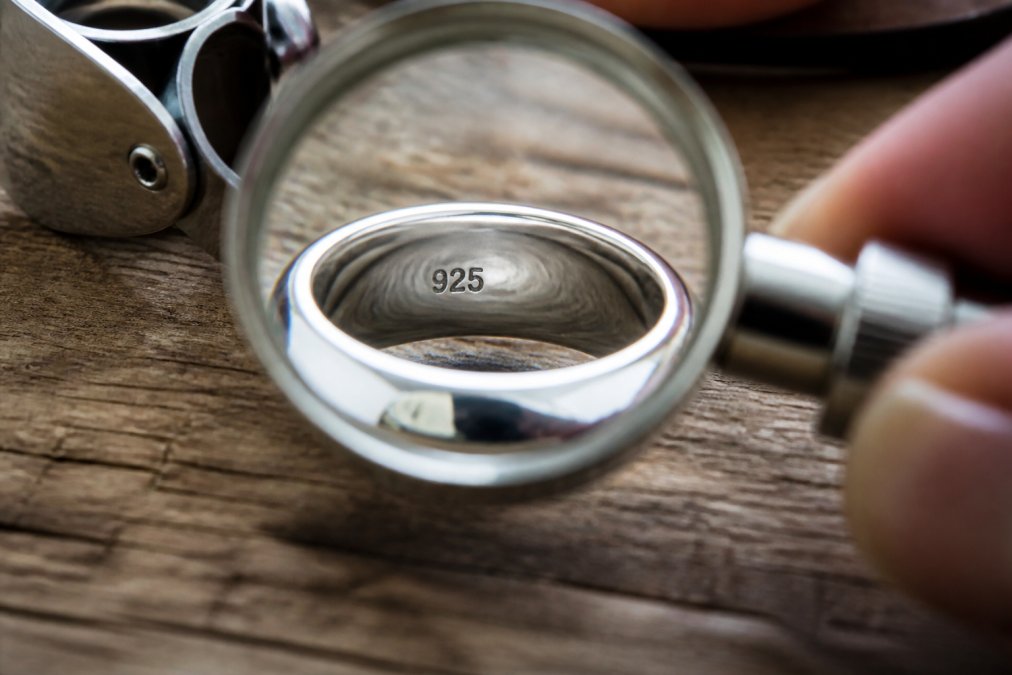
What fakes do: Counterfeit pieces sometimes include fake hallmarks that are poorly executed, shallow, or misspelled. Legitimate stamps are crisp and clean; fake stamps feel rough or uneven.
Imported sterling silver may include country-of-origin marks alongside the 925 stamp. UK pieces might show "925" with a lion hallmark; European pieces often display maker's marks.
Additional Quick Tests: Ice Cube, Sound, and Tarnish
Several other quick, safe tests can help verify authenticity, but each has limitations when distinguishing genuine silver from stainless steel counterfeits.
The Ice Cube Test
Silver conducts heat exceptionally well. Place an ice cube on the piece, real sterling silver melts it rapidly. Fake metals or silver-plated items melt ice much more slowly.
Important limitation: Stainless steel also conducts heat well and melts ice at a similar rate to genuine silver. If the ice cube test shows rapid melting but the piece has no hallmark, shows no tarnish, and feels unusually heavy, suspect stainless steel rather than silver.
The Sound Test
Drop the piece gently on a hard surface and listen.
Tarnish Patterns as an Authenticity Indicator
When to Seek Professional Jewelry Appraisal
Sometimes home testing isn't enough. If you're buying expensive pieces, selling inherited jewelry, or dealing with antique items, professional appraisal is worth the investment. A certified jeweler has tools and expertise that go far beyond what you can do at home.
When to get professional help:
- You're purchasing high-value jewelry
- The piece is antique or vintage
- You need documentation for insurance
- You plan to sell or trade the piece
- Multiple home tests give conflicting results
- The piece has sentimental or historical significance
- You suspect the hallmark might be fraudulent
What the appraisal includes:
- Metal type and purity verification
- Weight and dimensions
- Gemstone identification and grading
- Condition assessment
- Current market value estimate
- Written documentation for insurance
Frequently Asked Questions
Can fake silver say 925 on it?
Yes. Counterfeit pieces often display a 925 hallmark to appear authentic, which is why testing beyond the stamp is essential. Scammers use stamped markings to deceive buyers into thinking they're purchasing real 925 sterling silver. Always combine hallmark inspection with at least one physical test, such as the magnet test or acid test, to verify authenticity. GRA-certified pieces from reputable sellers like 834jewelry include documentation that proves purity.
What's the difference between silver plated and 925 sterling silver?
925 sterling silver is a solid alloy containing 92.5% pure silver and 7.5% other metals (usually copper), making it durable for jewelry. Silver plated items have only a thin coating of silver over a base metal like brass or stainless steel. Silver plated pieces wear away with time and exposure, eventually revealing the base metal underneath. 925 sterling silver maintains its integrity and value, while silver plated jewelry loses its finish and cannot be refinished reliably. 834jewelry's pieces are crafted in genuine 925 sterling silver for lasting quality.
Will a magnet stick to 925 silver?
No. Pure silver and 925 sterling silver are non-magnetic, so a magnet should not stick to genuine pieces. If a strong magnet attracts your jewelry, it contains ferrous metals and is not authentic 925 silver. This is one of the quickest home tests available. However, some base metals used in counterfeits are also non-magnetic, so combine the magnet test with other methods for confirmation.
How do I know if a GRA certificate is real?
Verify GRA certification directly through the Gemological Research Association's official database using the certificate number provided with your purchase. Reputable sellers like 834jewelry include authentic GRA certificates with every VVS1 Moissanite piece and can provide documentation of stone grading. Ask your seller for the certificate number and confirm it independently. Legitimate certificates include specific stone details, dimensions, and grading results that match the physical piece you receive.